Fascinating courtly intrigue and bloody power games set on a generation ship full of secrets―Medusa Uploaded is an imaginative, intense mystery about family dramas and ancient technologies whose influence reverberates across the stars. Disturbing, exciting, and frankly kind of mind-blowing.” ―Annalee Newitz, author of Autonomous

Wednesday, June 27, 2012

But -- Which Thief Of Bagdad?


If I say The Thief Of Bagdad is on my list of greatest movies, anyone who knows the history of fantasy films will immediately ask, Which one? There are several great versions, including the original silent film with Douglas Fairbanks Sr. It was remade in the sound era with Douglas Fairbanks Jr., whose version is also well worth watching. But in my opinion, the greatest version of all was made by Alexander Korda with the Indian actor Sabu, in 1940. It was largely filmed in England when WWII was well under way, and despite the fact that it had multiple directors, this Arabian Nights story rises above all others.


Plot is an important factor in a good movie, but in The Thief Of Bagdad there's a unique twist. The story is told in a non-linear Arabian Nights style, so it starts in the middle, goes back to the beginning, then proceeds to the end. And in keeping with Middle-Eastern tradition, there are stories within stories, all woven seamlessly into a lively tapestry of characters and adventures.


The set design is inspired – gorgeous, yet subtle when compared to the standard Hollywood concept of Arabian Nights décor. I'm especially impressed with the colors of the walls in the palaces, pale yellow near the bottom, but pale blue at the top, as if they're merging with the heavens. I don't think this is actual paint on the walls, it's a beautiful special effect that showcases the artistic and technical expertise of that era. The art director was Vincent Korda, and he deserves a large part of the credit for the magic of this movie.

The film score was composed by Miklós Rózsa, and it's one of his best. His chronicle of the writing of this score is included in his memoir, Double Life. The movie opens with a love song to adventure: “The sea is cruel but the sea is clean . . .” Rózsa's score is essential fantasy film music, enhancing the action and helping to advance the plot.


Last but not least, the cast is wonderful. Sabu, Rex Ingram, and Conrad Veidt are the three big stars in the move, but June Duprez may be the loveliest princess in fantasy movie history. John Justin, as the King Ahmad, is actually a little goofy, but intentionally so (since his character is a pampered blue-blood with little practical experience of the world). Veidt is masterfully fiendish as the evil sorcerer Jaffar, whose only weakness is his passion for the princess (“She has Babylonian eyes!”). Rex Ingram is a magnificent genie, even though he can't totally shake his New York accent. You can forgive him for calling Sabu, “Little Master of the Univoise.” And Sabu – a young man who was really an elephant boy in India when he was discovered – is Abu, a confident, kind-hearted rascal who loves the world and wants to see as much of it as he can.


If sense of wonder is what makes a movie magic, The Thief Of Bagdad has enough magic for two movies. When the genie gets Abu to steal the eye of the all-seeing goddess, he says that she won't be able to see the doings of men for another 2000 years, and you have to wonder why the genie wanted that to happen. Does he have plans with which she might have interfered? And who is the mysterious Halima who was Jaffar's right-hand woman (played by Mary Morris) – she bears a disturbing resemblance to the bloodthirsty wind-up doll that killed Sultan (played by Miles Malleson). What happened to the Kings of the Golden Age after Abu inadvertently released them from the crystal eye of the goddess? And at the end, when Abu flies off into the sunrise on the magic carpet, what adventures did he have?


When a story continues in your imagination long after the movie has ended, you know you've seen one of the greats. That's why The Thief Of Bagdad makes my Best Movies list.

Monday, June 18, 2012

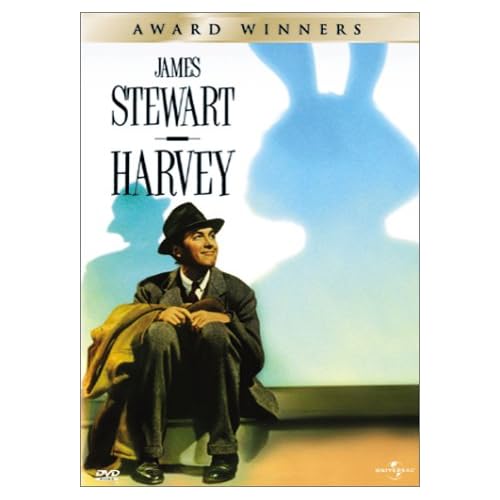
Harvey -- More Than Just A Giant, Invisible Rabbit


Harvey may seem like a whimsical choice for a Best Movies list. It's odd, and no earth-shattering issues seem to be addressed in the story. But there's more to Harvey than meets the eye – and I'm not just talking about the giant, invisible rabbit.

The first time I saw Harvey, I enjoyed it very much as a charming comedy with a touch of fantasy. In a nutshell, it's about a guy named Elwood P. Dowd who keeps company with a giant, invisible rabbit named Harvey. His sister (played by wonderful Josephine Hull) and her daughter think he's nuts, and his behavior is seriously cramping their style with the society folk in town. His sister decides he should be committed to the local sanitarium so she and her daughter can get on with their lives. But her attempts to put him away have unexpected results.


I like this movie so much, I've seen it at least a dozen times over the past decade. As I got older, I began to realize that the movie struck me a little differently every time I saw it. New layers are exposed with each viewing – and finally I understood that under all that light-hearted whimsy, Harvey is the story of a shattered man.

Jimmy Stewart played Elwood P. Dowd, Harvey's best buddy, in both the movie and the stage version. I doubt anyone else could have nailed the role, though Jim Parsons (Sheldon from The Big Bang Theory) seems like a good choice for the new stage version. Stewart is an essential American character, very much a product of his place and time. He raises his voice when he's irritated or excited, but when he's truly angered or troubled, his voice becomes quieter. As Elwood, he's unfailingly kind and courteous, so people respond to him warmly. Elwood is so likeable, some people even continue to like him after he introduces them to the invisible rabbit.


Elwood is younger than his sister, and their elderly mother doted on him. She left the entire estate to him when she passed away, which is another reason his sister feels she has to wrest Power of Attorney from him. He likes to invite people to supper at the home he shares with his sister and niece, regardless of who the people are or how long he's known them (usually just a few minutes). He is oblivious to class, race, religion, or any other social distinction, and in that time and place that's just plain awkward. Elwood seems innocent, perhaps a bit simple, and childlike in his reaction to people.

But if you really listen to him, you realize this is far from the case. Before his mother died, Elwood used to be a different man. As a member of the upper class, he was among movers and shakers. But something seems to have snapped in him. He quotes his mother a lot, and one wonders if her death was a blow from which he couldn't completely recover. His remarks also indicate a sense of futility in the pursuit of money, status, and power. After all, what good is any of that when the person you loved most in the world is gone? His recovery from this loss is fragile, but something unexpected has come along to help him hold it together: Harvey the pookah becomes his friend, confidant, and drinking buddy.


According to the movie, Pookahs are Celtic spirits with an odd sense of humor. The character of Wilson, an orderly at the sanitarium, discovers this when he looks the word up in the Encyclopedia. As he reads the definition aloud, the printed entry concludes with the words, “ . . . and how are you today Mr. Wilson?” “How am I?” demands Wilson. “Who in the encyclopedia wants to know?”

As the story begins to unfold, we find out that pookahs aren't just fun-loving, they have interesting powers, too. For instance, they can stop time. If they really like someone, they have a protective streak, too. Elwood needs that protection, because the misguided doctor in the movie believes the only way to shock Elwood back into a normal life is to give him a chemical lobotomy in the form of a drug called Formula 977. If Harvey were just about this dreadful injection, it would be a horror movie. Before the whole thing is over, you wonder if sweet, kind-hearted Elwood won't be shattered for good.


The story in Harvey works on multiple levels, and that alone would make it a good movie. But it also has a marvelous cast, and their deft performances are unforgettable. A less skilled actor than Stewart might have overplayed Elwood's simplicity, or camped up the whole invisible rabbit thing. Instead, Stewart plays the part not only with perfect comic timing, but also with a subtlety that allows you to understand Elwood's character once you really start to listen. The dark undercurrent in Elwood's life actually reminds me of a heart-breaking scene in the movie It's A Wonderful Life, another story that's often described as too sugary and feel-good. Anyone who describes it that way must not have seen the scene in which Stewart's character George Bailey, at the end of his rope after a large sum of money has disappeared, prays desperately to God for help. When God answers the prayer, it's not with an instant fix (Here's the money, pal – good luck!). Instead, he finds a way to let George know his life matters to people, that he's not alone.

Harvey finds a way to do that for Elwood, too. By the end of the movie, you realize that Elwood and Harvey probably have the best approach to life after all. And that's why Harvey is another permanent resident of my Best Movies list.


Wednesday, June 6, 2012

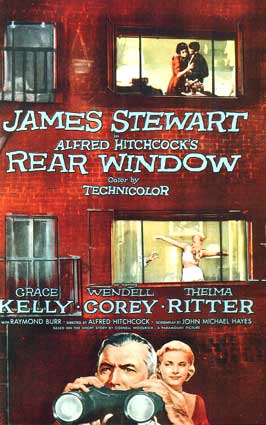
Rear Window: The Most Perfect Movie Ever Made


Making a list of the top ten of anything seems futile. Lists like that are subjective – what I like may make others go, “Meh.” Also, what makes this week's list may not make next week's. Plus it's probably not reasonable to limit lists to ten choices – Top Ten is an advertising gimmick that we've all bought into a little too readily.

Having said that, I have to admit that there is one good reason to make a list of your top ten favorites of something, and that's to give exposure to things you like, promoting them to people who may enjoy them. That's why I've decided to list my top ten favorite movies. My real list of favorites is way too long, but I'll pick the ten that occur to me as I write this. They're in no particular order – but there is one movie that I consider to be the most perfect movie ever made, so I'll put it at the top of the list. It's Alfred Hitchcock's version of Rear Window.


A perfect movie has to take the best possible advantage of its medium, which is primarily visual. It has a finite amount of time to tell its story, so each frame has to count – there can be no unnecessary scenes or shots. It has to have an excellent cast. And the story has to be good enough to make you keep your eyes on the screen the whole time, wondering what's going to happen next. If it isn't a silent film, the score has to complement the visuals rather than detracting from them. If you can do all that, you've made a perfect movie.
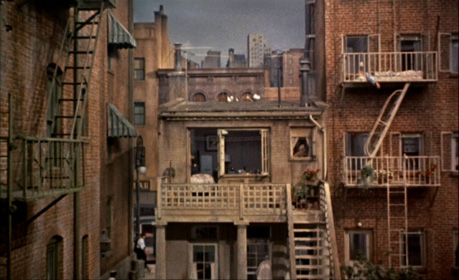
If you watch Hitchcock's Rear Window, you may be deceived into thinking that not much thought went into it. It's so seamless, you can't see how clever it is. There are two sets, and they blend into each other. The whole shebang – Jeff's apartment, the courtyard, and the other apartments the main characters can see into – was filmed on a big soundstage. The sounds and music in the movie are ambient, what you would naturally hear if you lived in one of those apartments. This enhances the reality of the setting, and puts the characters and story in the forefront. We're really there with 'Jeff' Jeffries, a world-traveling photographer who's laid up with a broken leg and going stir crazy. That's why we're able to see, almost from the beginning, that things are not what they seem.


The screenplay is based on Cornell Woolrich's short story, “It Had To Be Murder.” Woolrich was one of the best American short story writers of the 20th Century, a master of suspense. John Michael Hayes' adaptation is perfect, and I suspect it was shaped as much by the cast as it was by the necessities of the movie medium. Grace Kelly owns the role of Lisa – I think it's her best role ever. She's so believable, you know she lives beyond the story, having adventures well into her 90s.

Jimmy Stewart made several great movies with Alfred Hitchcock, including Vertigo, an almost-perfect movie. Vertigo is marred by an info-dump scene in which Kim Novak's character writes a letter explaining a plot point. The studio insisted this was necessary, because the executives who saw the first screening were too dumb to figure out what was going on. If Hitchcock could have lived long enough to see the “Director's Cut” videos that have since become the norm, I'm sure he would have insisted on releasing a version without that dopey letter scene in it.


Fortunately, Rear Window made it to the final cut without that sort of tampering. Complementing Kelly and Stewart is a cast of veteran character actors. Thelma Ritter shines as the visiting nurse, Wendell Corey makes you believe he's a police detective who also fought in WWII. The actors who play the neighbors whose antics are so fascinating really seem to be living the lives of those people. And Raymond Burr is one of the scariest movie killers I've ever seen.

Though Burr is a big guy, he's not an ax-wielding, snarling, macho kind of killer. He's clever, quiet, and sneaky. You don't get a hint of the violence he's capable of until someone actually confronts him. Even then, you get the feeling he'd rather not mix it up with anyone, he just wants to get rid of the multiple packages that used to be his wife and get on with his new life.

Stewart's character is also not a macho guy, though he has a lot of courage. He's never afraid to say what he thinks, but even if he didn't have a broken leg, you get the feeling Burr could have kicked his butt. That's what makes the final confrontation between the two so suspenseful.

One terrifying moment that stands out in Aliens is the scene where the door to the freight elevator opens. You suspect the Queen alien is crouched in that shadowy space, but you don't know for sure until you see the light glistening on those dreadful teeth. In Rear Window, the cinematographer manages to achieve that effect with Raymond Burr's glasses as he steps into Jeff's darkened apartment. Somehow, this nerd gear is transformed into something really creepy and threatening. Burr manages to make the salesman sound both pathetic and dangerous when he demands to know who Jeff is and what he wants.


Rear Window doesn't have a formal score, unless you count the title sequence (“Juke Box #6”), a delightful crime-jazz piece written by Franz Waxman in the heyday of the great movie scores. Otherwise, music plays on the radio, or is sung by drunken partygoers, or is tinkered together on a piano by a struggling songwriter in his rooftop studio. The song he's working on eventually becomes an integral part of the plot, and by the end of the movie it's “Lisa's Theme.”

The plot threads are woven into a satisfying conclusion, and Jeff and Lisa reach a believable accord in their relationship. The ending of the movie is every bit as perfect as the beginning. That's why Rear Window will always make my list of top ten greatest movies.

Wednesday, May 30, 2012

Oak Creek Canyon, Vortex Of Fabulosity


As Ernie and I drove south toward Sedona on HWY 89, I mused about all of the years I've been visiting that spot. No doubt about it – Sedona, in its pre-vortex, pre-nouveau-riche, semi-old-west-town incarnation was a lot more fun than it is now. But Oak Creek Canyon, Sedona's raison d'etre, remains beautiful, magical, and delightful. There is no place like it on Earth, and the not-so-simple reason for that is its geology.


It's a small canyon – at least, compared to its giant cousin up North. Yet it shares a lot of the same layers you see exposed in the Grand Canyon. The mnemonic to remember with that chunk of the Colorado Plateau is this one: Know The Canyon's History – Study Rocks That're Made By Time.

Know – Kaibab: sandy limestone, greyish-white
The – Toroweap: also sandy limestone, a bit darker
Canyon's – Coconino: cross-bedded sandstone
History – Hermit: shale
Study – Supai: it's complicated
Rocks – Redwall: limestone (gray, but stained red by      hematite)
That're – Temple Butte: sandy dolomite, sandstone, mudstone, and limestone
Made – Muav: limestone
By – Bright Angel: shale
Time – Tapeats: sandstone


All of those layers, starting with the Tapeats at the bottom and ending with the Kaibab on top, are Paleozoic. In Northern and Eastern Arizona you can find at least a few Mesozoic layers too (from the Age of Dinosaurs): Moenkopi, Moenavi, the Chinle layer of Petrified Forest National Park, the Navajo Sandstone of Monument Valley, etc. It gets complicated, depending on how far North and East you go. Arizona was at the edge of the continent when a lot of this stuff formed, so you see layers from shallow seas, sandy shores, dune-y deserts, and river floodplains.


Ernie and I observed the whimsical shapes into which the Moenkopi layer likes to erode when we hiked through Wupatki. If we had continued North on HWY 89 (or the equally delightful alternate route, 89A) we would have seen more of this layer in Utah. Heading South on 89, we dropped in elevation, losing any hint of the dinosaur age, but discovering some interesting layers in Oak Creek Canyon that are not seen in the Grand Canyon. The east side of the fault that forms Oak Creek Canyon is topped by a thick basalt layer, a lava flow. But the Kaibab, Toroweap, and Coconino layers were eroded on this side of the fault, so the layer under that is the Hermit.


Much of the west side (1000 feet higher than the east) is topped with the Kaibab limestone. The basement rock is the Redwall layer – a lot of Sedona is built on that layer. Above that is the Supai, which is actually a group of layers, mostly sandstone and mudstone. The Hermit shale layer sits on top of that; despite its name, it is a complicated mix of sandstone, mudstone, and conglomerate. And on top of that is an 800 to 1000-foot-thick layer unique to the area: the Schnebly Hill formation, a series of gold and rust-red layers of sandstone, mudstone, and limestone. The sandy parts were were once coastal dunes.


Another layer pinches out inside the Schnebly Hill formation, a greyish band of Fort Apache Limestone. Coconino sandstone tops many of the formations on the south side, but it merges in places with the Schnebly Hill formation, giving the rocks a nifty striped appearance.


Like the Grand Canyon, Oak Creek Canyon can surprise you as it suddenly appears out of the landscape. This is particularly true if you approach from Flagstaff. The North end of the canyon is hidden among trees. Then you get to drive down the niftiest switchbacks on Earth, observing some spots where the layers have literally been pulverized by the fault. Invariably, when I'm driving through oak Creek Canyon, I have to pull over to let impatient motorists pass. For some reason, they like to zoom through this paradise, as if they could actually be bored by the sight. Poor, doomed souls. I hope my spirit will take this route to the Great Beyond, once I've left this mortal form behind.


In the meantime, this mortal form is very happy to hike various spots in the canyon (after having eaten a delightful lunch at the Galaxy Diner in Flagstaff). The first spot I wanted to hit was the trail near the West Fork of the Creek. You have to pay to get into this spot – it's not a State Park or a National Park. But it deserves to get a little moolah for its upkeep, and I'm grateful it never draws the same sort of crowd you would see at Slide Rock State Park. (Try visiting Slide Rock in January if you just want to hike and don't care about swimming – hardly anyone is there and it's spectacular.)


After that, we headed for Midgely Bridge (or as the locals call it, Midgely Bridgely). The climb down to the trail that begins under the bridge is a little heart-stopping, but you get an amazing view of the fork in the creek and of the Supai rocks. You can hike all the way down to the creek from there, a hot proposition if it's summer and the sun is shining. Fortunately for us, it was a cloudy spring day, so down we went. Wildflowers and rock formations caught my eye on the way down, and I saw some evidence of ancient hot spring activity in some of the rocks that had eroded from higher spots.


Hiking back up was much more of a challenge (for me, at least – Ernie is a mountain goat), but we still had enough energy to explore a part of the road (now a trail blocked to motor traffic) where the old bridge used to be. It was mysterious, and hinted at other spots not often accessed by casual hikers in the canyon. Some day, Ernie and I will spend a season there, exploring the general area. This is my fond ambition . . .


But the day was waning, so we stopped at our favorite coffee joint on HWY 89, before looping back to do the spectacular drive along HWY 179. Some of the niftiest formations reside there, and at one point the setting sun set the rocks ablaze. I had to pull over to one of the overlooks and snap some photos. I just managed to catch the sunset lighting up the rocks before the light shifted and the moment passed. My heart brimmed with satisfaction.


Sipping iced mochas, we headed back to Phoenix on I-17. I would rather have lingered and extended our day trip into days, weeks, months. But I comfort myself by considering the fact that Oak Creek Canyon, Walnut Canyon, Sunset Crater, Wupatki, Montezuma Castle, and dozens of other wonderful spots are in my backyard.


I just need to venture there from time to time.

Wednesday, May 16, 2012

Into The Great Semi-Known


At mondoernesto, my husband, Ernie, wrote about our recent trip up North to Sunset Crater and Wupatki National Monument. This was one of those trips we needed to take to feed our souls. Money is tight right now, and these trips are much less frequent than they used to be. So we packed as much fun as we possibly could into one day, starting the trip at 6:00 a.m. and ending it at 8:00 p.m.

If I could, I would live on the road. Granted, I've never had to do that, and maybe you get sick of it pretty past. But in my opinion, you get a lot less sick of it if you can take your time (and if the money doesn't run out). After we got up in the wee hours and fed the hungry cannibals (both feline and canine), we got into our truck and hit the road. My heart was flying.


About an hour-and-a-half up I-17, off Exit 289, there's a turn-around that can take you in three different directions. If you go right, you'll get to Cliff Castle Casino. If you go straight forward(ish), you'll get to the cliff dwellings of Montezuma Castle. And if you go left, you'll end up at a combo gas station/fast food joint. I've come to love that odd little hybrid at the end of the left-hand turn. We always stop to get coffee there, get gas, and make a pit stop. It has come to symbolize the beginning of all journeys (or at least, the ones that go up I-17).

Montezuma Castle and Montezuma Well are both fascinating and beautiful destinations. A peacefulness pervades the scene in both places that leads visitors to assume an idyllic life for the people who actually lived there, which was probably true at least part of the time. Likewise, Walnut Canyon, which eroded out of the same top layers that compose the walls of the Grand Canyon, is also a happy destination. But we were bound for Sunset Crater and Wupatki, places where life could sometimes be less than idyllic.


For one thing, around 1045 AD, a volcano went off. It was a small one, a cinder cone, but on the human scale that's plenty big enough. Sunset Crater is part of the San Francisco Volcanic field – the San Francisco Peaks are what's left of a composite/stratovolcano that blew itself up pretty much the way geologists would expect a stratovolcano to blow – out one side, like Mount Saint Helen's or Vesuvius. But the mix of magma in that general area is a little more complicated than that. The stratovolcano squirted out mostly intermediate volcanic rocks and pyroclastic flows, but Sunset Crater started as a rift eruption, and its magma was the low-silica kind you might expect to see on Hawaii, from one of its shield volcanoes. This low-silica magma had a high gas content, so it created a curtain of fire, blowing the runny lava high into the air, where it got whipped into cinders.


The eruption eventually became concentrated at one end and built a cinder cone. Near the end of the eruption, two types of mafic (low silica-high Fe & Mg) lava flows burst through the cone at the bottom: runny pahoehoe lava and chunky Aa. And for the grand (semi-)finalé, The volcano blew more gassy, mafic lava into the air, out of the top, and rained cinders down on the landscape. (Those darker cinders, higher in Fe & Mg, are called scoria.)

I say semi-finalé, because apparently hot magma continued to rise underground for a while, and this stuff melted enough of the surrounding rocks to be higher in silica. When it oozed through cracks in lava that was already cool, it acted kind of like toothpaste. You can see examples of this squeeze-y stuff in one of the cracks near the Lava Flow trail head.


It's convenient to generalize about geological processes, partly to avoid confusing people and partly to paint a broader picture. But when you're actually confronted with the landforms in this part of Arizona, you have to admit there's a lot we don't know. The shallow subduction of the Farallon Plate near the end of the Mesozoic Era seems to have drawn volcanic activity farther inland than you would normally see it, which is why a stratovolcano ended up in Arizona. But something even more interesting may have happened. Arizona may have actually over-ridden the hot upwelling that was creating the rift in the first place.


If you look at the Atlantic Ridge System, you'll see it lies pretty much in the middle of that ocean. It's a classic opening basin. But the Pacific Ridge System in messier. The plates are moving apart at a faster rate, and most of the volcanic activity in the world is happening at the edges of those plates. Right in the middle of the Pacific Plate, a mantle plume is steadily blasting through, creating the Hawaiian island chain. Another plume created the Yellowstone Caldera. And if you look at New Mexico and Southern Colorado, you'll see that an ongoing continental rift has created the Rio Grande River Valley. The Colorado Plateau continues to rise. So geologists think we must be still moving over that hot, upwelling spot.


Since peridotite and basalt have been found in Arizona and New Mexico, some of that hot stuff has to have come from the mantle. These are the nerdy thoughts that run through my mind as Ernie and I hike all over the Sunset Crater and Wupatki trails. In Wupatki, people used the little box canyons to divert water to their gardens. And though there's a lot of talk these days about how hot and dry it is there, 1000 years ago there was probably more ground water, simply because there weren't any gigantic communities nearby draining it. The cinders that lie on top of the soil keep rainwater from running off – they filter down into the aquifer, and emerge as springs.


The stones used to build the dwellings were carved out of the Moenkopi formation, a wonderful mix of sandstone and shale that erodes into whimsical shapes.


As Ernie and I hiked through the sites, I noticed that the sacred mountains could be seen from all directions.  Any argument about why people settled in the area must include those mountains.  
The day was only half gone.  More adventures loomed on the horizon, like storm clouds . . .


COMING NEXT – OAK CREEK CANYON, VORTEX OF FABULOSITY

Friday, April 27, 2012

Why Don't People Read More?


The other day, Lance Polingyouma, my coworker at the Heard Museum Book Store, was dismayed to discover a printing error in the book he was reading, a collection of essays from a gathering of Grand Canyon historians. A large chunk of text was missing, and other chunks of text had been duplicated. This book is on Lance's Top Ten list for the bookstore, and he had been pushing it like crazy. He sold the other two copies we had and was thinking about buying the third, himself. Now we'll have to send that copy back to the publisher and get a replacement. At some point, the customers who bought the other two books could come in and demand their money back, if their books are also defective. We had to shrug and say, “Oh well. We'll cross that bridge when we get to it.”

But as I was driving to work this morning, I began to wonder if we ever will get to it. Lance is a gifted bookseller – my old employer, Borders, would have drooled over his ability to pitch a book. And because Lance is of Hopi, many Anglo visitors to the Heard Museum hang on his every word. If he recommends a book, they tend to buy it. But that doesn't mean they'll ever read it.


When you're a bookseller, it's usually because you really like books. You like to think that people are going to read what you've sold them. But what we booksellers often forget is that dreaded thing, a thing from which we also cringe: the TBR pile. All of us have a mountain of books at home that are designated To Be Read. We're really interested in those books, we really intend to read them some day – but it's going to be a while before we read many of them, and some of them will never get read.

The problem is not-enough-time-in-the-day-itis. If you're fascinated with a lot of things, and you buy books about those things, the time eventually comes when you have to admit that you could read ten hours a day and not finish all of those books. And let's face it – you're not going to read ten hours a day, for all sorts of good reasons. You've got family and friends, a day job, maybe a garden, a household to run – maybe you're even afflicted with the writing bug yourself, and boy, does that cut into your reading time. So your TBR pile grows and grows. Eventually it can look more like a chore than a pleasure. Once that happens, your reading really slows down.

When books were first invented, readers didn't have this problem. The library at Alexandria burned down, another library at Herculanium was buried in volcanic ash, and Irish priests were sitting on most of what was left. So average readers didn't have as many titles they could buy. They had a shelf of favorite books (or scrolls) they could read over and over again. This may sound odd, but there's something to envy about that. Your other chores may have piled up back in those early days, but your book stack just couldn't get that ponderous.


Sill, anyone who enjoys reading would rather have our TBR piles. And now that young people enjoy reading more than ever, those stacks can only grow larger. When I first started working in a bookstore (back in the Dark Ages), adults pushed what few books were written for young people as if they were spinach. “Here, hold your nose and swallow this – it's good for you.” When kids discovered they liked a book, it was completely by accident. And if they wanted another book like it, they didn't have that much to choose from. The YA section in that store I worked in all those years ago had only two small shelves dedicated to YA books.

Now, thanks to J.K Rowling, Stephanie Meyer, Suzanne Collins, and other pioneering authors, you could fill an entire store just with YA titles. Kids are reading them, and so are adults. E-readers give people an even wider selection, at lower prices, so the virtual TBR stack is also growing.

Let's face it. We're doomed. We can only sit and stare into space, thinking, So many books, so little time. And that's the real reason why people don't read more. Lance and I can probably relax – even if those two books turned out to have printing errors, it may take those customers a couple of years to figure it out.

And if it doesn't, Lance will probably just sell them more books.


Wednesday, April 11, 2012

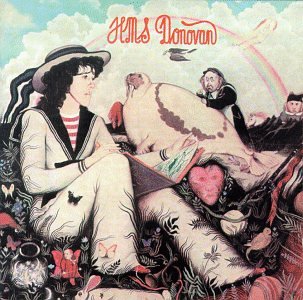
H.M.S. Donovan


Anyone who worked in a music store back in the Days of Yore (when we could actually play what we wanted instead of suffering through the programmed stuff) will tell you that one of the great pleasures of that job was introducing customers to great albums they would not have otherwise known. When I worked in the music department at Borders, many years ago, HMS Donovan was one of the albums I loved to promote.


Most people only knew the Donovan who sang “Mellow Yellow,” a delightful song, but hardly the full range of Donovan's repertoire. And very few people may recall his cameo appearance in the movie, If It's Tuesday, This Must Be Belgium, in which he sings “Lord Of The Reedy River.” That this incredibly romantic song is included on HMS Donovan is a testament to the emotional range represented by the album. It was produced as a present to his young daughter. But, though it contains children's songs and poems, there is nothing tame about them. You have only to listen closely to the song of “The Walrus and the Carpenter” (from Alice In Wonderland) to know that.


A tantalizing rumor that has persisted for many decades is that at least Paul McCartney and possibly also John Lennon did backup vocals (as the doomed Oysters) for “The Walrus and the Carpenter.” This is hard to confirm, because the vocals were altered, probably mechanically or (my own whimsical theory) possibly by having the performers inhale helium. This theoretical collaboration is hard to dismiss, considering that a version of “The Walrus and the Carpenter” is on a Beatles bootleg album. Donovan isn't credited for singing on that bootleg, but he did work with the Beatles from time to time. McCartney did backup vocals for Donovan's song, “Atlantis.” And Donovan helped McCartney finish writing the song, “Yellow Submarine” by coming up with the lyrics, “. . . Sky of blue, and sea of green, in our yellow submarine . . . “ When the Beatles traveled to India to visit the Maharishi, Donovan went along.


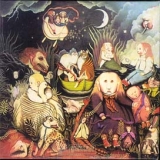
Another interesting thing about the album is the artist who did the cover and the interior art (in the earlier printing, a bonus poster was included) – a fellow who simply called himself Patrick. Patrick also did the art that was supposed to appear on the Beatles album that eventually became the White album. Needless to say, this did not happen, and the art was eventually used for The Beatles Ballads and the EMI Dutch release of a love songs album, De Mooiste Songs.


My brother, David, researched Patrick some more and discovered that he is the Scottish artist and playwright, John Patrick Byrne. He is well known in Scotland and has published a children's book, Donald And Benoit. Mr. Byrne doesn't seem to play up his connection with the Beatles, so a fan set up a website for him. To quote from the bottom of the home page: "This is a website dedicated to the paintings of the Scottish artist John Byrne, the true renaissance man from Paisley. I thought about calling it 'ohforgodssakewhycan'tIfindJohnByrnes paintingsonthenet.com,' but, sadly, the domain name was already taken."


One last bit of trivia about Mr. Byrne -- his significant other is Tilda Swinton.


As for the other album whose cover Mr. Byrne painted, YouTube lists many of the songs on HMS Donovan. Unfortunately, the one for “The Walrus and the Carpenter” seems to have been recorded with a hand-held microphone off of someone's turntable, using a scratched LP. This version of “Jabberwocky” is much better.


And one of my all-time favorites, “Henry Martin,” is also well represented.


There are 28 songs on the album, and most of them can be sampled on YouTube. Once you've heard them, you may decide to download the songs from itunes. If so, it's an investment you won't regret.

Wednesday, April 4, 2012

The Heard Museum Book Store


In Phoenix, At Central Avenue and Encanto, you'll find one of the last surviving bookstores, The Heard Museum Bookstore. We specialize in books by and about Native Americans, and about Arizona travel, geology, and history. We have also have children's books and cookbooks. People often ask me which books are my favorites, so here are my (current) top ten.


EM'S FAVES (In No Particular Order):


Grand Canyon: Vault Of Heaven, by the Grand Canyon Association

Magnificent photographs and a very informative text, at a bargain price!


Grand Canyon's Long-Eared Taxi, by Karen L. Taylor

Find out why mules are the only animals that can ferry people into the Great Unknown.


Roadside Geology Of Arizona, by Halka Chronic

Learn more about the Geology Capital of the World – from your car!


Gem Trails Of Arizona, by James R. Mitchell

Catch gem fever and go looking for not-so-buried treasure.


Talking Mysteries, by Tony Hillerman and Ernie Bulow

Read what Hillerman and Bulow have to say about their lives and about writing.


The Arizona Cookbook, by Al Fischer & Mildred Fischer

Authentic Indian, Western, and campfire recipes


Forest Cats, by Jerry Kobalenko (photographs by Thomas Kitchin & Victoria Hurst)

An informative text with breath-taking photographs


Frequently Asked Questions About The Saguaro, by Janice Emily Bowers

Find out why the saguaro is truly the movie star of the desert.


Sheep In A Jeep, by Nancy Shaw & Margot Apple

A wild and wooly expedition!


Brighty Of The Grand Canyon, by Marguerite Henry

The adventures of a beloved burro, with delightful illustrations